Application goal
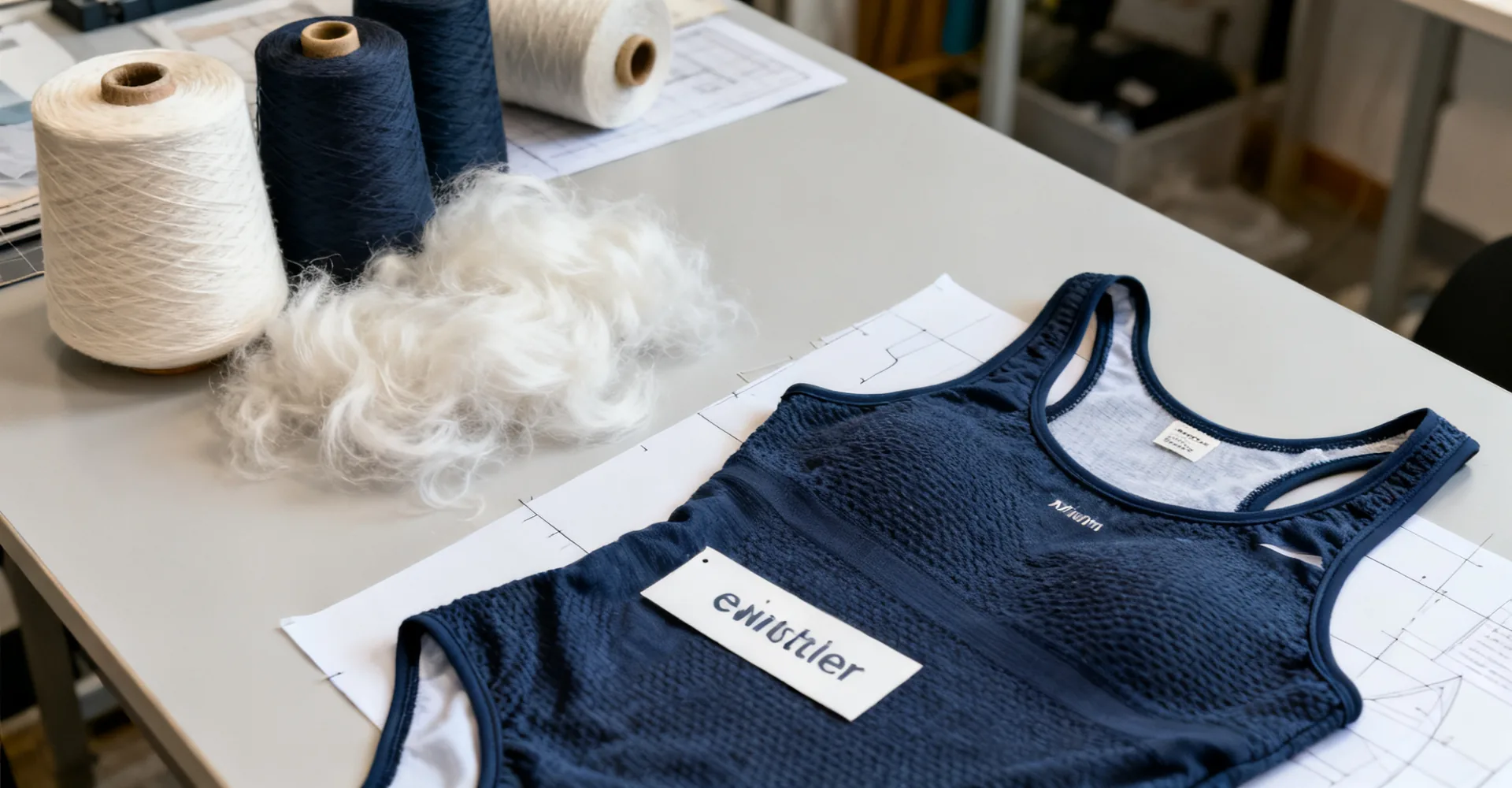
Name the problem the fiber has to serve. A swimwear program may care about stretch recovery, chlorine exposure, and hand after wet finishing. An outdoor textile program may care about filament strength, denier, and how the yarn will sit in a later weave or knit. Write the goal before choosing a construction story. Record buyer targets as targets: a swimwear note might say 78 dtex filament and 12% elastane by mass, while an outdoor note might say 150 denier with tensile strength still untested. Colorfastness, pilling, dimensional stability, and abrasion resistance wait for a cloth specimen. GSM, usable width, warp, weft, and weave construction do not belong on a fiber-only line.
Construction route
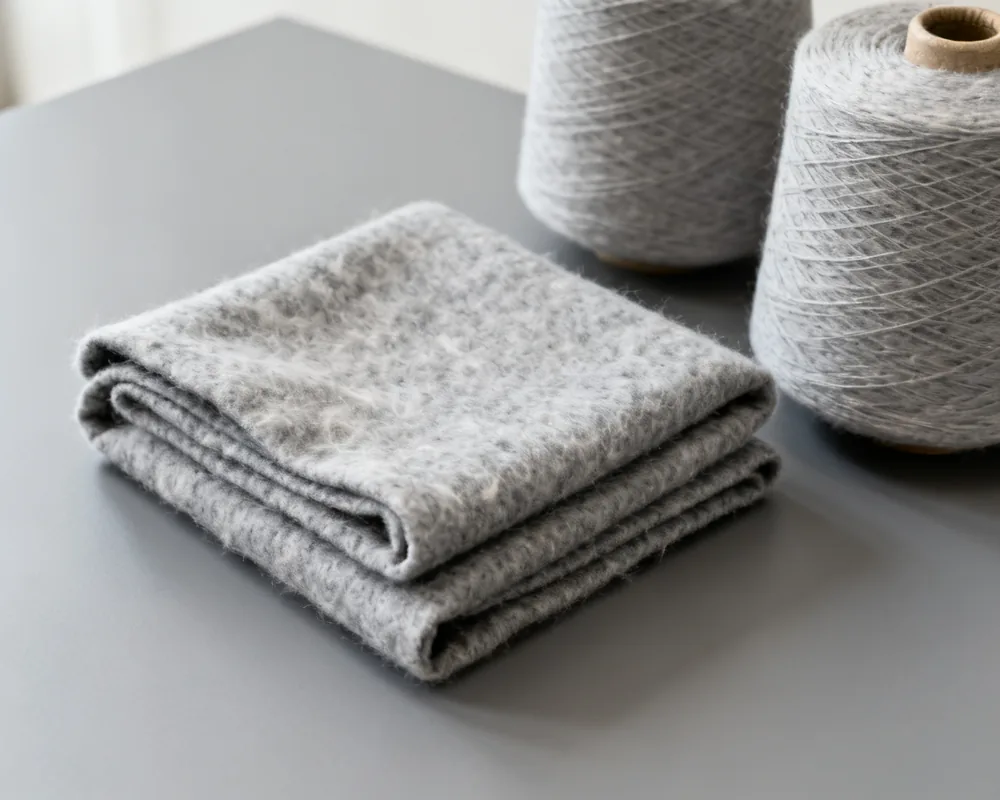
Separate the recycled fiber input from the yarn that would carry it. Linear density, filament or spun form, and blend ratio change the next trial. Yarn count and denier are different systems: a 167 dtex cone is not a 20s yarn count, and a 75 denier filament is not a 140 g/m² cloth. A cone, a package, or a cut length is a supply format to confirm for that material, not a standing stock promise. If the format is a roll, roll inspection and batch traceability are the checks that link that roll to the reference, and they are still questions until a document names them.
Evaluation gate
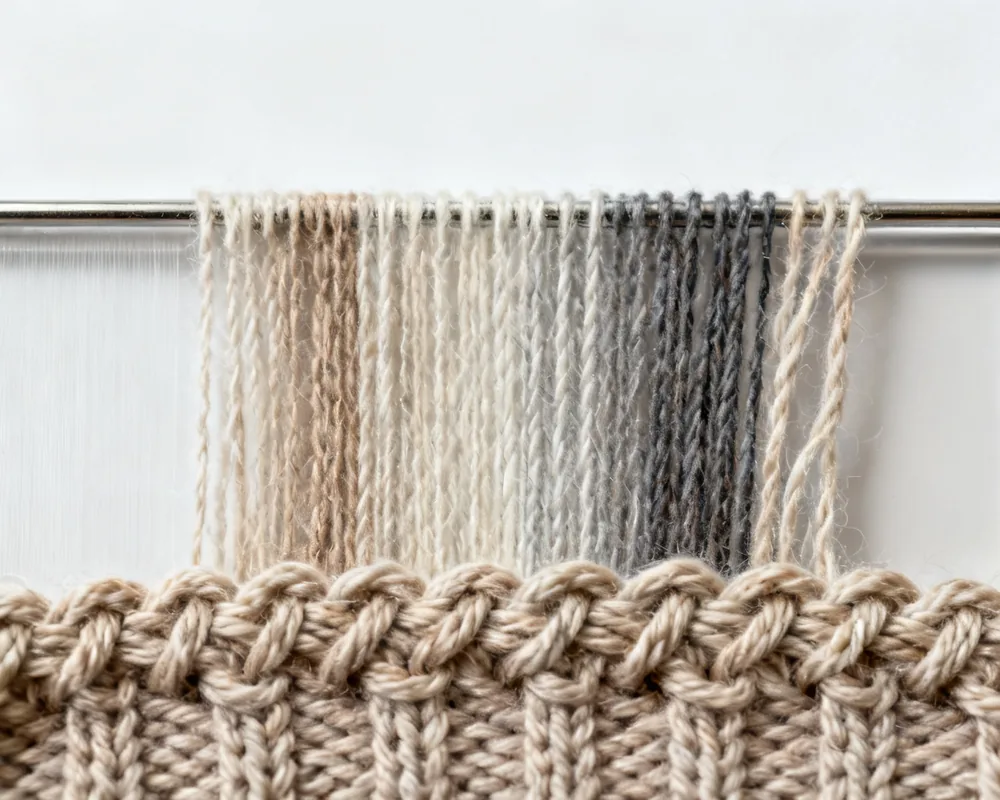
Decide what the next review must show: a dated specimen, a declared composition, or a method-specific result with sample state. If someone asks for tear strength, seam slippage, hydrostatic head, or water vapor transmission, name the method and whether the piece is fiber, yarn, or cloth. Air permeability is a separate method. A lab dip and a shade band are color checks, not fiber certificates. An inquiry can ask for those items. It does not by itself prove that a sample is available or that bulk will match the reference.